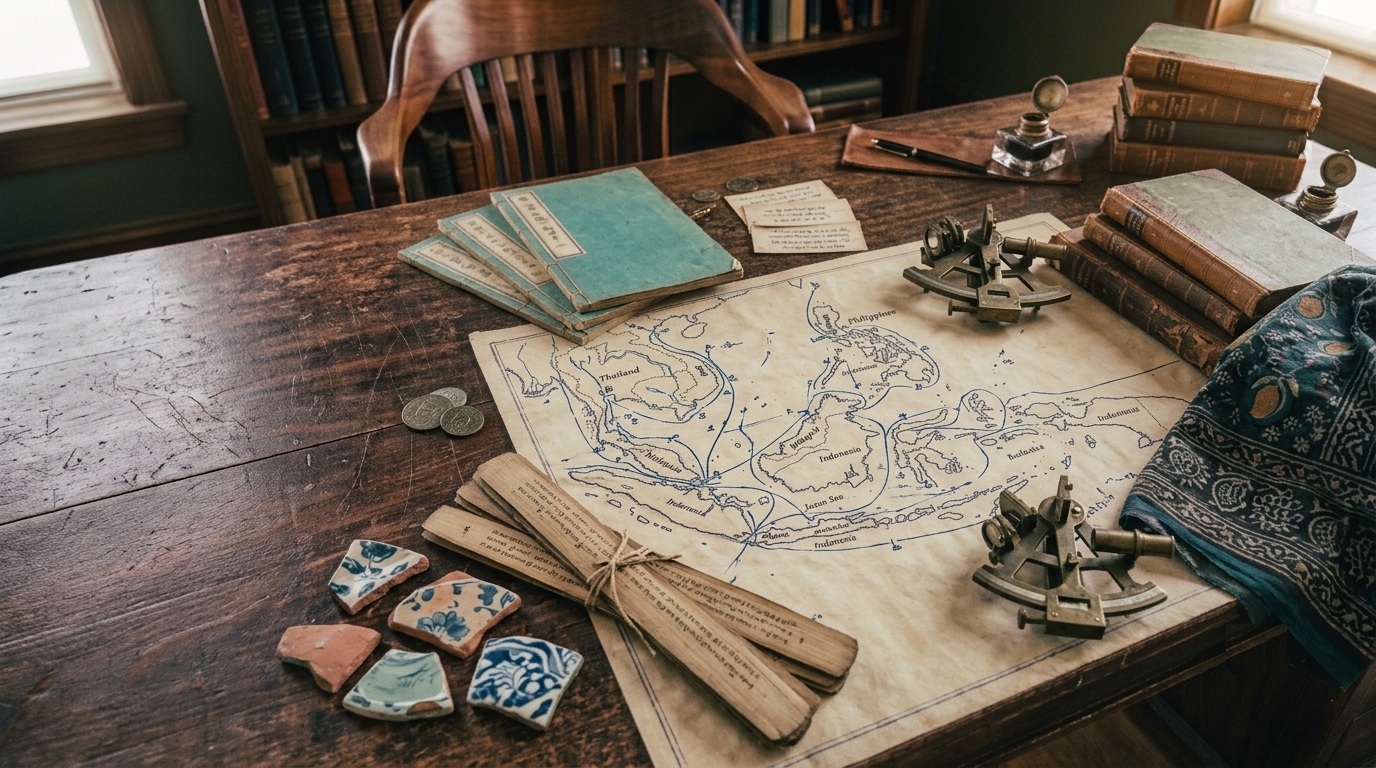
Magellan Expedition Reaches the Philippines
By early 1521, Ferdinand Magellan's Spanish-backed fleet had endured a grueling Pacific crossing from South America, marked by starvation, scurvy, and the loss of most ships and crew. After sighting Guam in early March, the remaining vessels sighted the Philippine archipelago on March 16. The expedition anchored at Homonhon Island, where the crew rested, traded with local inhabitants, and learned of nearby islands and customs. This marked the first documented European contact with the Philippines. Magellan claimed the islands for Spain as the Islas de San Lázaro, establishing an initial alliance and setting the stage for further exploration and eventual Spanish colonization in the region.